

About the Blog Topic
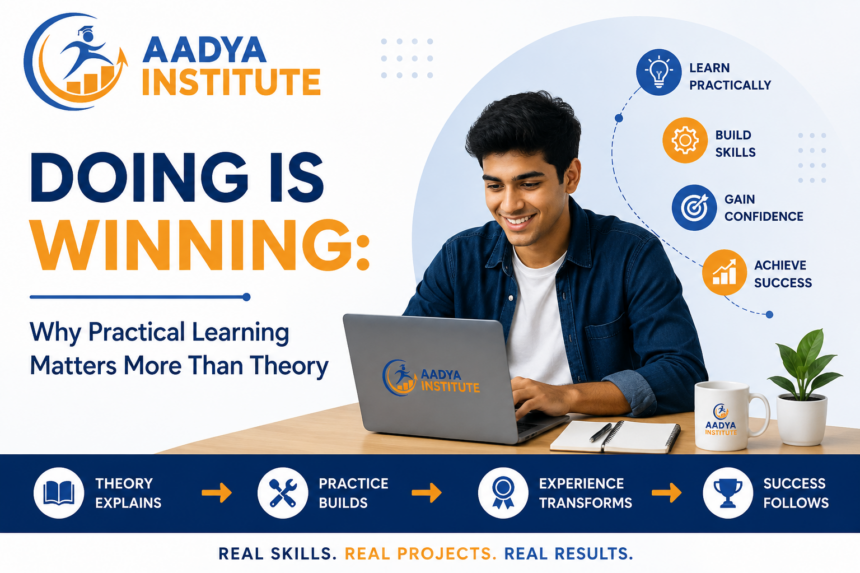
In today’s world, just reading books and learning theory isn’t enough especially for students and young professionals. While theoretical knowledge builds a foundation, it’s practical learning—learning by doing—that truly sets you apart. Think about learning to swim. Reading about swimming won’t stop you from sinking, but jumping into the water (with guidance) will teach you fast! This blog explains why practical learning is more important than ever, how it boosts your confidence, and why it is the key to real-world skills and better career readiness.
Key Points: Why Practical Learning Leads the Way
- Practical Learning Builds Real-World Skills
• Practical knowledge is learning by doing. It might be through workshops, internships, projects, or event management.
• You get to practice what you learn, from using tools and equipment to working in teams and solving real problems.
• Example: Managing a college fest or leading a club prepares you for teamwork, stress management, and decision-making far better than just studying management theories.
- Moves Beyond Bookish Learning—Learning by Doing
• When you DO something, you remember it longer. Studies show that people retain more knowledge when they use it in real-life settings, not just from reading or listening.
• Mistakes made during hands-on experience teach lessons far deeper and are remembered much more than just reading about them.
• “Action speaks louder than words” — this is exactly true in education. - Increases Confidence and Promotes Skill Development
• Each time you apply your knowledge, you gain confidence. Each error or challenge improves your understanding and adaptability.
• Practical learning environments encourage you to try, fail, and grow—this builds resilience.
• Students who participate in labs, sports , or college clubs become better decision-makers and innovative thinkers.
- Encourages Teamwork and Effective Collaboration
• Practical learning usually involves teamwork—like group projects, sports, or organizing events. This builds social skills, empathy, and leadership.
• You learn to cooperate, communicate, solve conflicts , and work towards a common goal, just as you will need in a real job.
- Makes Learning Interesting & Fun
• Practical lessons are more engaging. You experiment, analyse, ask questions, and actively participate, which leads to a deeper understanding.
• Activities like mock trials in law, science labs, or creative events in college make concepts come alive.
- Bridges the Gap Between Theory and Practice
• Theoretical knowledge is essential for the basics, but without practice, it’s like having a car with no fuel—it won’t go anywhere.
• Applying theory in real situations is what makes the learning stick and prepares you for careers after college.
- Boosts Problem-Solving and Critical Thinking
• Instead of only following instructions, practical tasks make you think creatively and find real solutions to unexpected challenges.
- Prepares Students for Career Success
• Employers today want people who can DO, not just KNOW.
• Practical skills like using technology, project planning , or clear communication make you workplace-ready and more employable.
Difference Between Theory and Practical Learning
Theoretical Knowledge | Practical Knowledge | |
Definition | Based on reading and understanding | Gained by hands-on experience, doing real work |
Involvement | Books, lectures, concepts | Labs, workshops, projects, group activities |
Implementation | Research papers, exams, discussions | Actual work, internships, field tasks |
Skills Built | Foundation, logic, basic understanding | Application, teamwork, leadership, adaptability |
Retention | May forget after exams | Stays long-term due to real exposure |
Example | Knowing traffic rules | Actually driving on the road |
Conclusion
Practical learning is not just an extra—it’s essential! While theory builds your basics, doing is what gives you confidence, skills, and career readiness. In a world where “what can you DO?” matters more than “what do you know?”, practical learning is the game-changer.
It makes education lively, boosts your mental and social skills, and finally, prepares you for success after graduation.
Whether you’re a student, teacher, or job-seeker, focus on gaining more hands-on experience, join clubs, participate in workshops, and never shy away from “learning by doing.”
Remember: Doing is Winning!